1. Introduction to IFS Cloud and Master Data Management

IFS Cloud: Modular, Composable, and API-Driven

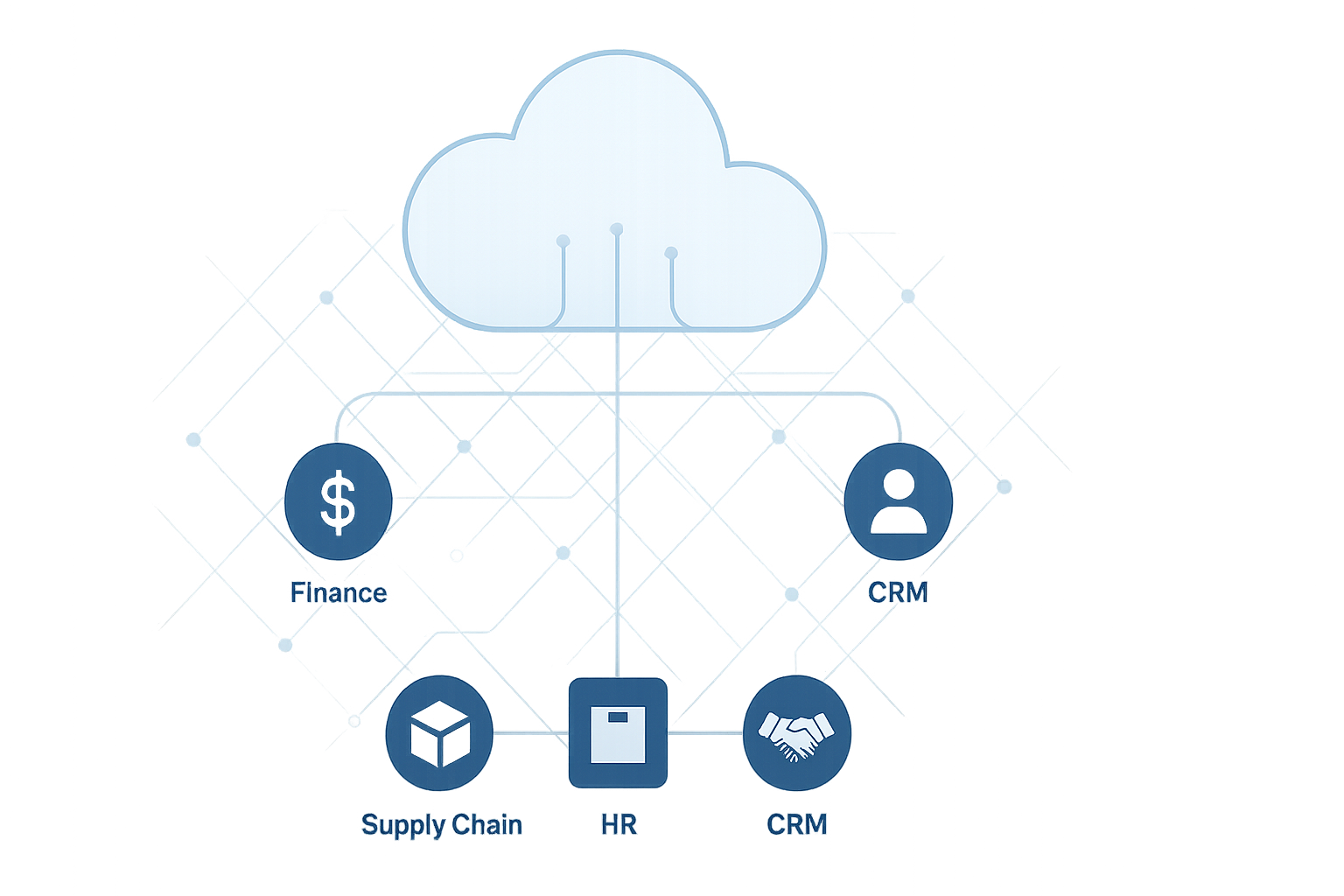
IFS Cloud is a next-generation enterprise resource planning (ERP) platform designed to meet the evolving needs of modern organizations. Its architecture is fundamentally modular, allowing organizations to deploy only the components they need—such as finance, supply chain, HR, CRM, and asset management—while maintaining seamless integration across business functions. This modularity is underpinned by a composable system, where digital assets and functionalities can be assembled and reassembled as business requirements change. The platform’s API-driven approach, featuring 100% open APIs, ensures interoperability with third-party systems and supports agile integration strategies. This enables organizations to extend, customize, and scale their ERP landscape efficiently, leveraging RESTful APIs, preconfigured connectors, and support for industry-standard data exchange protocols (EDI, XML, JSON, MQTT, SOAP) .

The Role of Master Data Management (MDM) in IFS Cloud

Master Data Management (MDM) is central to IFS Cloud’s value proposition. MDM ensures that critical business data—such as customer, supplier, product, and asset information—is accurate, consistent, and governed across all modules and integrated systems. By establishing a single source of truth, MDM eliminates data silos, reduces redundancies, and enhances operational efficiency. This is particularly vital in complex ERP environments, where data is often scattered across multiple applications and departments. MDM in IFS Cloud supports regulatory compliance, improves decision-making, and streamlines operations, making it a foundational element for any data-driven enterprise .


2. Understanding Data Contracts in Modern Data Governance

What Are Data Contracts?

Data contracts are formal agreements between data producers (e.g., application teams, business domains) and data consumers (e.g., analytics, reporting, or downstream systems). These contracts specify the structure, semantics, quality, and service-level expectations for data exchanged between parties. They define schemas, metadata, ownership, access rights, and quality metrics, ensuring that both producers and consumers have a shared understanding of the data .

Purpose and Benefits of Data Contracts


3. Relationship Between Master Data Management and Data Contracts

MDM as the Foundation for Data Contracts

MDM provides the authoritative, standardized data that forms the basis for effective data contracts. By ensuring a single source of truth, MDM eliminates inconsistencies and enables organizations to define contracts on top of reliable, governed data assets .

Layering Data Contracts on MDM


4. Data Domains in IFS Cloud: Structure and Examples

Concept and Structure of Data Domains

In IFS Cloud, data domains are logical groupings of data assets aligned with key business functions. The platform’s architecture is organized into tiers—presentation, API, business logic, storage, and platform—each supporting the definition and management of data domains. Components within IFS Cloud group related entities, projections, and business logic into coherent capability areas (e.g., General Ledger, Accounts Payable), enabling modular deployment and management .

Table: Example Data Domains in IFS Cloud

Data Domain Business Function Example Data Assets
Customer CRM, Sales, Service Customer profiles, contacts, contracts
Supplier Procurement, Finance Supplier records, agreements, payment terms
Product Manufacturing, Inventory Product master, BOM, specifications
Asset Maintenance, Operations Asset registry, maintenance history, warranties

The IFS Data Catalog: Classification and Governance

The IFS Data Catalog is a key tool for classifying, indexing, and governing data assets within these domains. It automatically scans data sources, creates metadata catalog entries, and classifies information to support compliance and discoverability. The catalog provides a unified view of the data estate, enabling data stewards to manage data assets effectively and ensure alignment with governance policies .


5. Implementing Data Mesh in ERP Systems Using IFS Cloud Data Domains

Core Principles of Data Mesh

Data Mesh is a paradigm shift in data architecture, emphasizing:

  1. Domain-Oriented Ownership: Data is owned and managed by the business domains closest to its source and use .
  2. Data as a Product: Each data set is treated as a product, with clear interfaces, quality standards, and product owners .
  3. Self-Serve Data Infrastructure: Platform teams provide tools and infrastructure that enable domain teams to build, deploy, and operate their own data products .
  4. Federated Computational Governance: Governance is distributed but coordinated, ensuring consistency, security, and compliance across domains .

Using IFS Cloud Data Domains as the Foundation

IFS Cloud’s modular, domain-aligned architecture is ideally suited for Data Mesh:

Diagram: Data Mesh with IFS Cloud Data Domains

[Customer Domain]---[Data Contract]---\
[Supplier Domain]---[Data Contract]----> [Data Catalog & Self-Serve Platform] <---[Consumer: Analytics, Reporting, External APIs]
[Product Domain]----[Data Contract]---/

6. Case Studies and Practical Insights

Real-World Examples

Outcomes

Organizations implementing Data Mesh in ERP or similar environments report:

Challenges and Best Practices

Key Challenges

Best Practices


7. Conclusion

Implementing IFS Cloud Master Data as Data Contracts within a Data Mesh framework represents a powerful approach to modernizing data management in ERP systems. By leveraging IFS Cloud’s modular, API-driven architecture and robust MDM capabilities, organizations can establish reliable, governed data domains that serve as the foundation for domain-oriented data ownership and productization. Data contracts formalize the expectations and responsibilities around data exchange, enhancing data quality, reliability, and compliance.

When combined with Data Mesh principles—domain ownership, data as a product, self-serve infrastructure, and federated governance—this approach delivers tangible benefits: improved business agility, democratized data access, and robust governance. Real-world examples from organizations like Saxo Bank and Siemens demonstrate the transformative potential of this strategy.

As ERP environments grow in complexity and scale, adopting these modern data management practices is essential for organizations seeking to unlock the full value of their data, drive innovation, and maintain a competitive edge in the digital era.


For data architects, ERP professionals, and business leaders, the path forward is clear: embrace modular, governed, and product-oriented data management with IFS Cloud and Data Mesh to future-proof your enterprise data landscape.